Skip to content

Sweep vs Elements.cloud

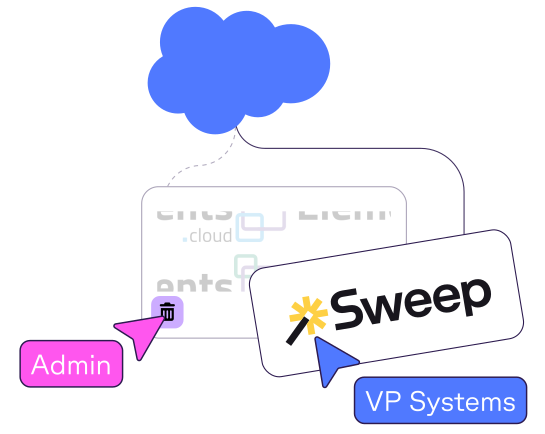
Elements documents your org. Sweep acts on it.

Static snapshots and expert-only output don't move work forward. Sweep's Metadata Agents reason over your org continuously, surfacing risks and dependencies the moment they appear — and turning them into action.

Images

How Sweep and Elements.cloud compare

Capability
Elements.cloud
Dependency mapping
Org visibility & monitoring
Process mapping
AI documentation
Automation & execution
Plain-language insights
Data quality & deduplication
Implementation
Impact analysis
Agentforce lifecycle support
Yes
Interactive and executable.
 
Yes
Real-time visibility. Risks and dependencies surfaced instantly.
Yes
Live and automated. No manual diagramming.
Yes
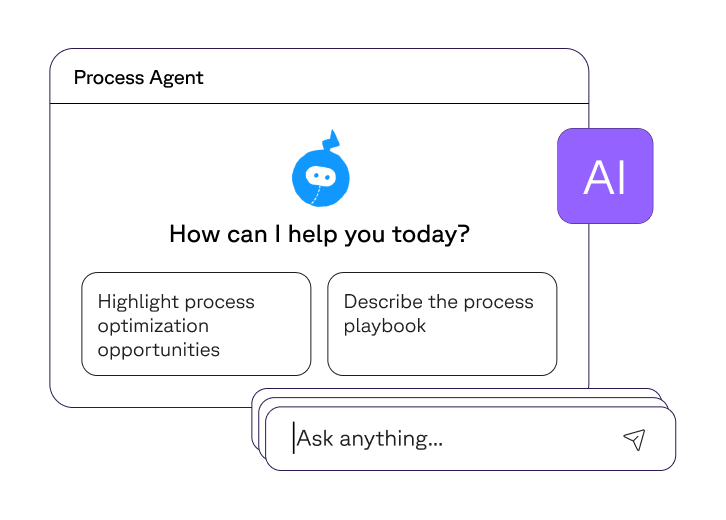
Chat with your org. Docs self-update with no manual sync.
Yes
Identify, document, and deploy in one layer.
Yes
Shareable analysis for every stakeholder.
Yes
Built-in matching, routing, and assignment logic.
 
Yes
Up and running within days. No package or consulting needed.
Yes
Agents recommend and execute fixes.
 
Yes
End-to-end, through to deployment and monitoring.
 
Yes
Available but is static and not actionable.
No
Static snapshots. Useful for audits, not always-on.
Yes
Available as AI-generated diagrams but not live or executable.
No
Basic AI chat layer. Interpretation stays manual.
No
Insight only. Execution is manual.
 
No
Technical output requiring expert interpretation.
No
Not a native feature.
 
 
No
Manual setup, managed package, often needs consulting.
Yes
Diagnostic only, action remains manual.
 
Yes
Strong readiness but stops short of execution.
 
Join market leaders who have swept away Salesforce chaos.

Documentation should work for everyone

Most tools like Elements.cloud aren't built for everyone

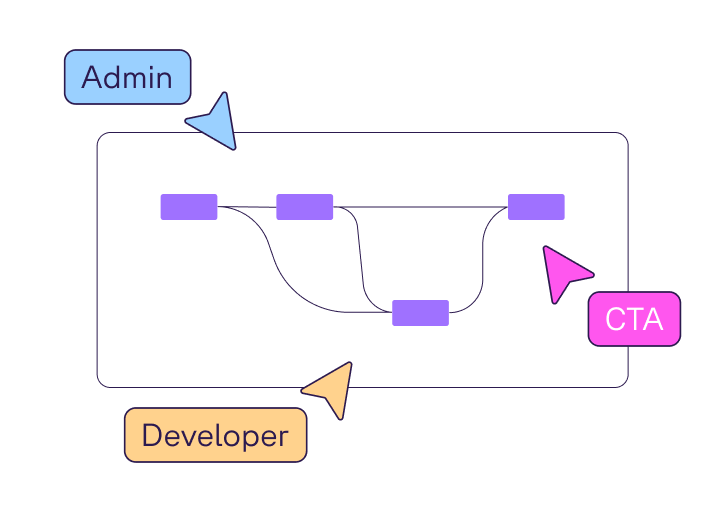
Change intelligence is only useful if it can be easily shared and understood. For internal teams, business users, and admins, key insights are often locked in silos.
  • Designed around consultant and architect workflows, not internal teams.
  • Insights become less digestible and easy to act on.
  • Documentation is built for project handoffs, not the people running the org day-to-day.

The downside of this strategy

  • Teams wait on details for routine changes.
  • Automations no one wants to touch.
  • Documentation drifts, and no one's sure if what they're reading is still accurate.
  • Consultants become a permanent fixture.
  • Answering a simple question still requires tracking down the right person.
  • As the org grows, the knowledge gap grows alongside it.

When you can see everything, you can fix anything

"The AI-powered documentation is the fundamental thing that sets Sweep apart.
What would have taken one or two days now takes about 15 minutes."

Frame 2147256052

"We were spending on average 5 to 10 hours a week on territory management. Now that's something that's been reduced now to maybe an hour a week, even less."

Frame 2147256052 (1)

"What used to take two weeks of digging now takes just 20 minutes. Being able to get into a Flow and ask the AI agent what is happening in this Flow is actually invaluable."

Frame 2147256052 (2)

Why this matters in modern Salesforce orgs: the context gap

Every Salesforce org accumulates complexity. Fields multiply. Automations layer on top of automations. Business logic scatters across Flows, Apex, validation rules, and institutional knowledge that lives in one person's head. That's the Context Gap. It's the distance between how your org actually works and what anyone on your team can confidently explain about it. Elements.cloud documents what exists. Sweep actually closes the gap between what exists and what it means.

Every role has the context they need.
  • Teams can act confidently without constantly seeking sign-off.
  • Plain-language insights anyone can understand.
  • Metadata Agents provide context from day one.
  • Fix issues, deploy automations, and execute changes without leaving Sweep.
  • Insights and actions are easily shared and understood.
  • Documentation stays current automatically: no manual sync, no version drift.
  • Automated monitoring means your org keeps improving after every change.

Without Sweep

  • Org intelligence lives in institutional knowledge only.
  • Changes wait for expert review.
  • Business users can't self-serve answers.
  • New team members take months to ramp up.
  • Every fix needs a developer, consultant, or DevOps handoff.
  • Documentation needs manual updates and version drift is constant.
  • No one knows if yesterday's fix caused today's problem.

Why users swear by Sweep

With everything that Sweep can do for you, you’ll finally sleep on deployment nights.

Frame 2147256074 (1)

No more guessing games across orgs

When your Salesforce orgs' configuration diverge, you will know immediately, and not six months later during a failed release. Sweep surfaces cross-org drift before it becomes an incident.

Frame 2147256075

Ship changes without the anxiety

Dependency mapping shows you how a change will impact your system before you deploy. See every automation, relationship, and downstream dependency so you can catch breaks before they happen.

Frame 2147256077

AI that actually knows your system

Most AI tools fail in multi-org environments because they don't have full cross-org visibility. Sweep gives every agent a complete, coherent picture of your entire Salesforce metadata. 

Unified clarity for every stakeholder

Frame 2147256072 (3)

Admins & Architects

Automate your documentation

Frame 2147256072 (4)

CIOs & VPs

De-risk your modernization

Frame 2147256072 (5)

RevOps Leaders

Accelerate GTM velocity

See all your Salesforce orgs in one place

A short demo is all it takes to understand what Sweep can do across your Salesforce environment.

Let us show you how organized your orgs can be.